

Location
CoLab, COM 100
Start Date
1-5-2025 11:00 AM
Document Type
Poster
Description
This experiment aims to find antimicrobials from the soil samples collected for class. The sample was taken and used for serial dilutions, which reduced our soil density to a more usable concentration. A master plate is then made by transferring our bacteria onto a petri dish. Different screening plates are then made to test our microbes against different types of safe relatives of ESKAPE pathogens. Those colonies are then used to see which ones create the best zones of inhibition. The safe relatives that produced the largest zones of inhibition were E. faecalis, S. epidermidis, and E. coli. A quadrant streak plate is then made which helps obtain isolated colonies. Finally, metabolic testing, PCR, and gel electrophoresis are used to correctly identify the bacterial colonies grown from the streak plates.
Image
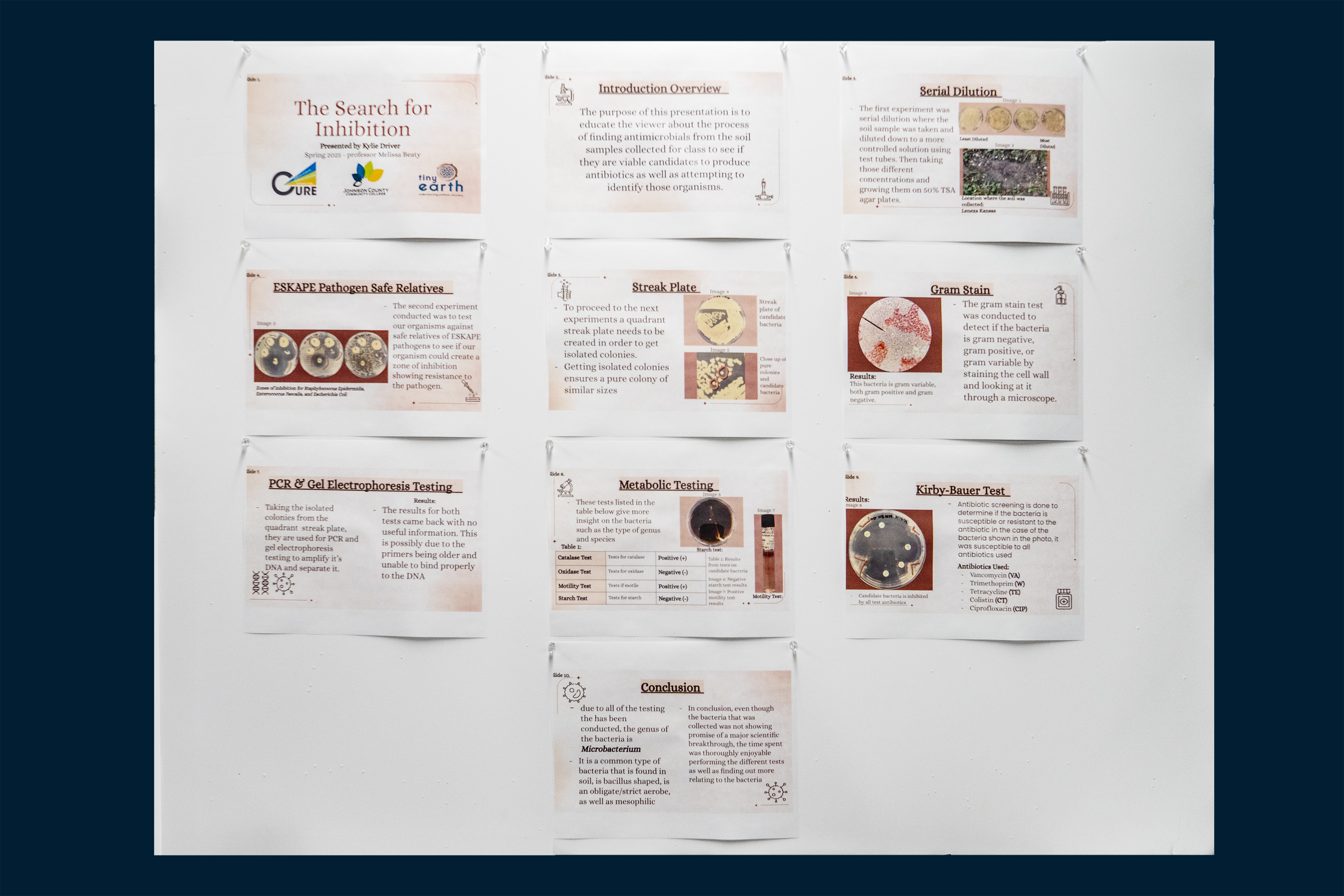
The Search for Inhibition
CoLab, COM 100
This experiment aims to find antimicrobials from the soil samples collected for class. The sample was taken and used for serial dilutions, which reduced our soil density to a more usable concentration. A master plate is then made by transferring our bacteria onto a petri dish. Different screening plates are then made to test our microbes against different types of safe relatives of ESKAPE pathogens. Those colonies are then used to see which ones create the best zones of inhibition. The safe relatives that produced the largest zones of inhibition were E. faecalis, S. epidermidis, and E. coli. A quadrant streak plate is then made which helps obtain isolated colonies. Finally, metabolic testing, PCR, and gel electrophoresis are used to correctly identify the bacterial colonies grown from the streak plates.
Comments
The faculty mentor for this project was Melissa Beaty, Biology.