

Location
CoLab, COM 100
Start Date
1-5-2025 11:00 AM
Document Type
Poster
Description
Tallgrass prairies can store significant amounts of carbon in their roots and soil. Managing land for carbon sequestration plays a crucial role in addressing climate change. This study used two distinct restored prairies. Stoll Park features a restored prairie mainly composed of native forbs, whereas the JCCC campus has a restored prairie with six different native tallgrass species. The samples were analyzed for total organic carbon using the Walkley-black method. In addition, soil respiration was investigated through a "burst" test, with carbon dioxide levels measured using a gas analyzer. The total organic carbon content in soil samples from the two restored prairies will be compared and discussed.
Image
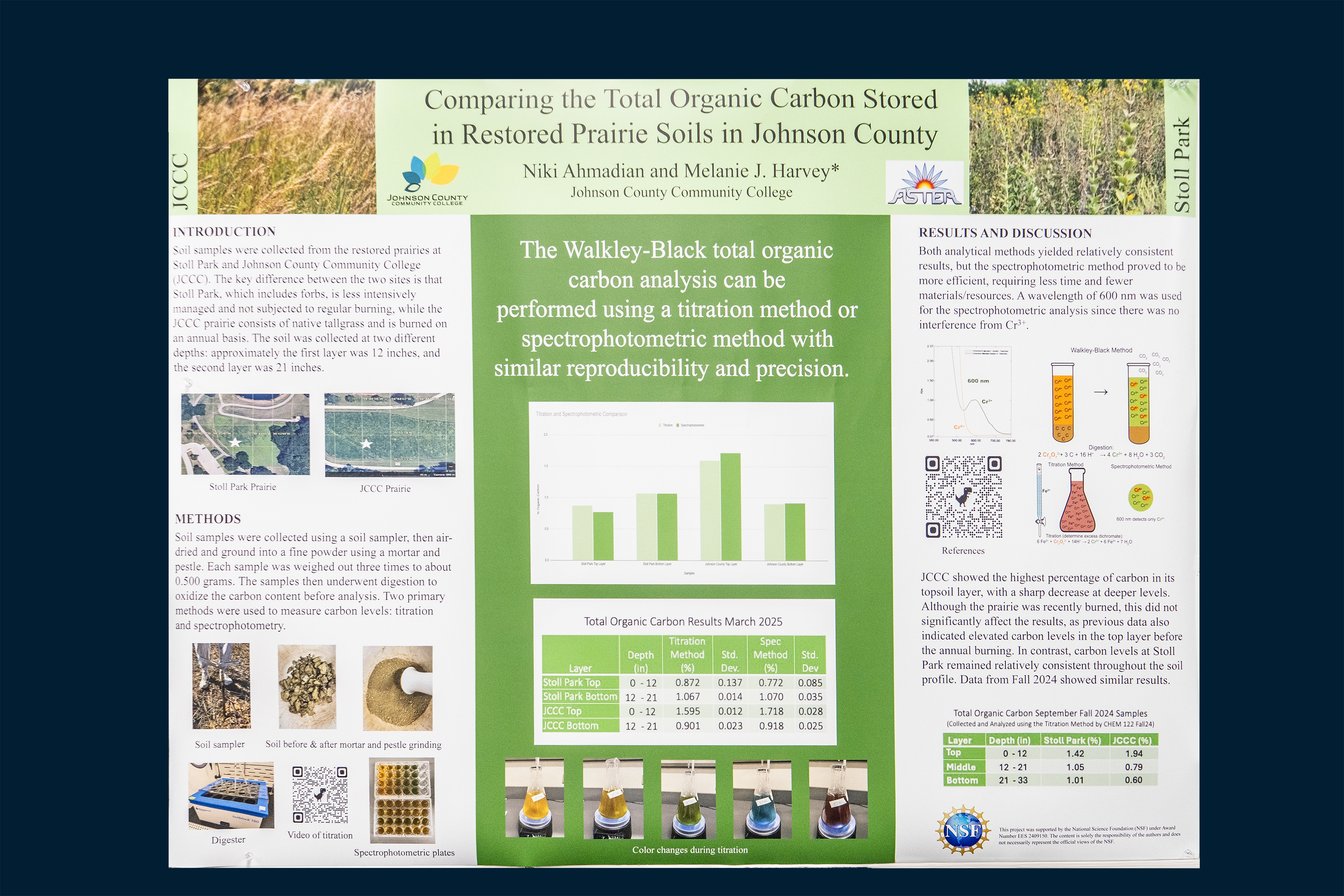
Comparing the Total Organic Carbon Stored in Restored Prairie Soils in Johnson County
CoLab, COM 100
Tallgrass prairies can store significant amounts of carbon in their roots and soil. Managing land for carbon sequestration plays a crucial role in addressing climate change. This study used two distinct restored prairies. Stoll Park features a restored prairie mainly composed of native forbs, whereas the JCCC campus has a restored prairie with six different native tallgrass species. The samples were analyzed for total organic carbon using the Walkley-black method. In addition, soil respiration was investigated through a "burst" test, with carbon dioxide levels measured using a gas analyzer. The total organic carbon content in soil samples from the two restored prairies will be compared and discussed.
Comments
The faculty mentor for this project was Melanie Harvey, Chemistry.