

Location
CoLab, OCB 100
Start Date
25-4-2024 10:30 AM
Document Type
Poster
Description
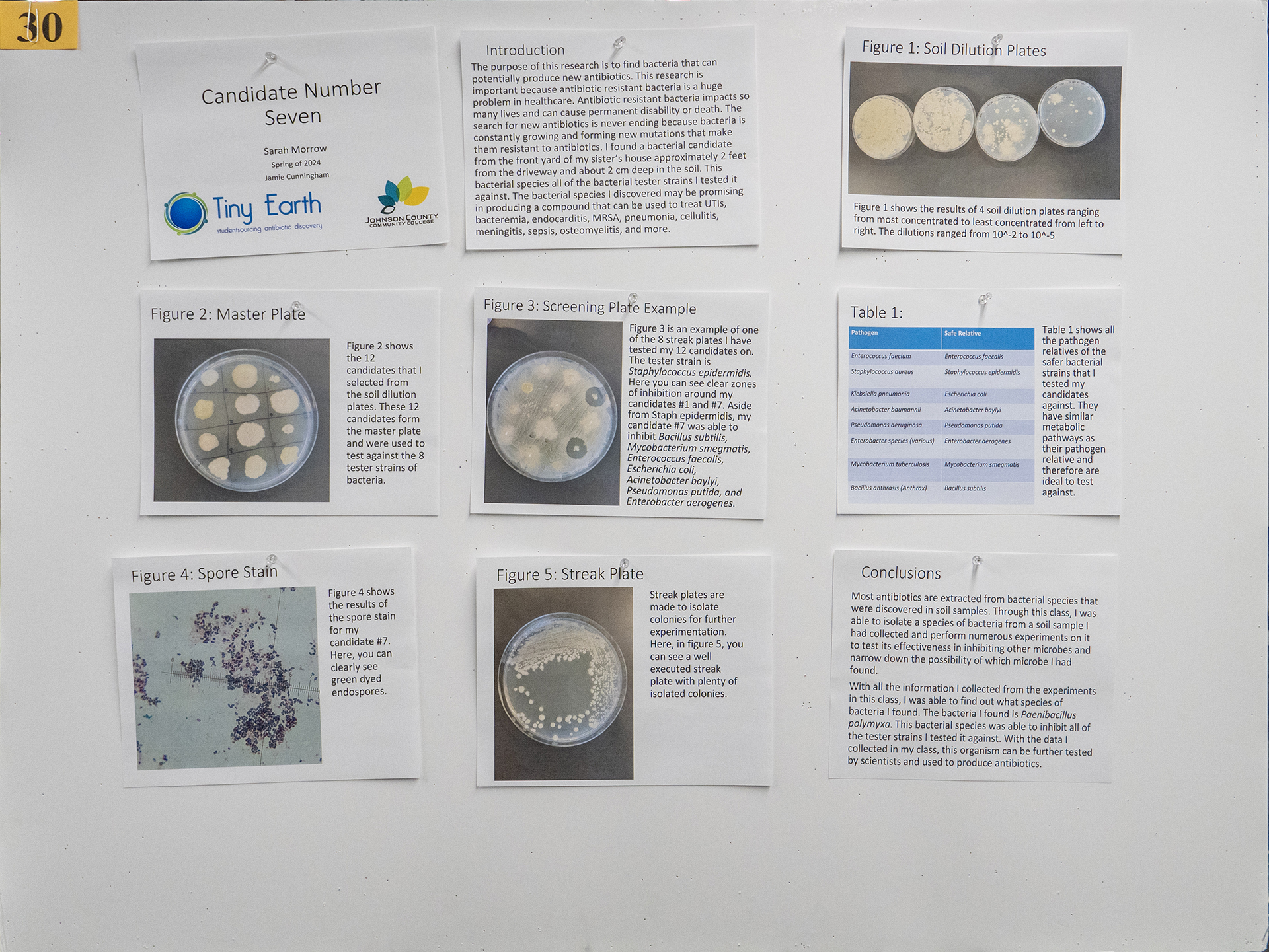
The purpose of this research is to find bacteria that can potentially produce new antibiotics. This research is important because antibiotic resistant bacteria is a huge problem in healthcare. Antibiotic resistant bacteria impacts so many lives and can cause death in both immunocompromised and healthy individuals. The search for new antibiotics is never ending due to the fact that bacteria is constantly growing and forming new mutations that make them resistant to antibiotics. I found a bacterial candidate from the front yard of my sister’s house approximately 2 feet from the driveway and about 2 cm deep in the soil. This bacterial species inhibited the following organisms: Escherichia coli, Enterobacter aerogenes, Pseudomonas putida, Acinetobacter baylyi, Staphylococcus epidermidis, Bacillus subtilis, Mycobacterium smegmatis. It showed a small, possible zone of inhibition with Enterococcus faecalis. The bacterial species I discovered may be promising in producing a compound that can be used to treat the following infections: Certain urinary tract infections, bacteremia, endocarditis, MRSA, pneumonia, cellulitis, meningitis, sepsis, osteomyelitis, and more.
Image
Candidate Number Seven
CoLab, OCB 100
The purpose of this research is to find bacteria that can potentially produce new antibiotics. This research is important because antibiotic resistant bacteria is a huge problem in healthcare. Antibiotic resistant bacteria impacts so many lives and can cause death in both immunocompromised and healthy individuals. The search for new antibiotics is never ending due to the fact that bacteria is constantly growing and forming new mutations that make them resistant to antibiotics. I found a bacterial candidate from the front yard of my sister’s house approximately 2 feet from the driveway and about 2 cm deep in the soil. This bacterial species inhibited the following organisms: Escherichia coli, Enterobacter aerogenes, Pseudomonas putida, Acinetobacter baylyi, Staphylococcus epidermidis, Bacillus subtilis, Mycobacterium smegmatis. It showed a small, possible zone of inhibition with Enterococcus faecalis. The bacterial species I discovered may be promising in producing a compound that can be used to treat the following infections: Certain urinary tract infections, bacteremia, endocarditis, MRSA, pneumonia, cellulitis, meningitis, sepsis, osteomyelitis, and more.
Comments
The faculty mentor for this project was Jaime Cunningham, Biology.