

Sheet Metal Lamp Fabrication
Location
CoLab, OCB 100
Start Date
25-4-2024 10:30 AM
Document Type
Poster
Description
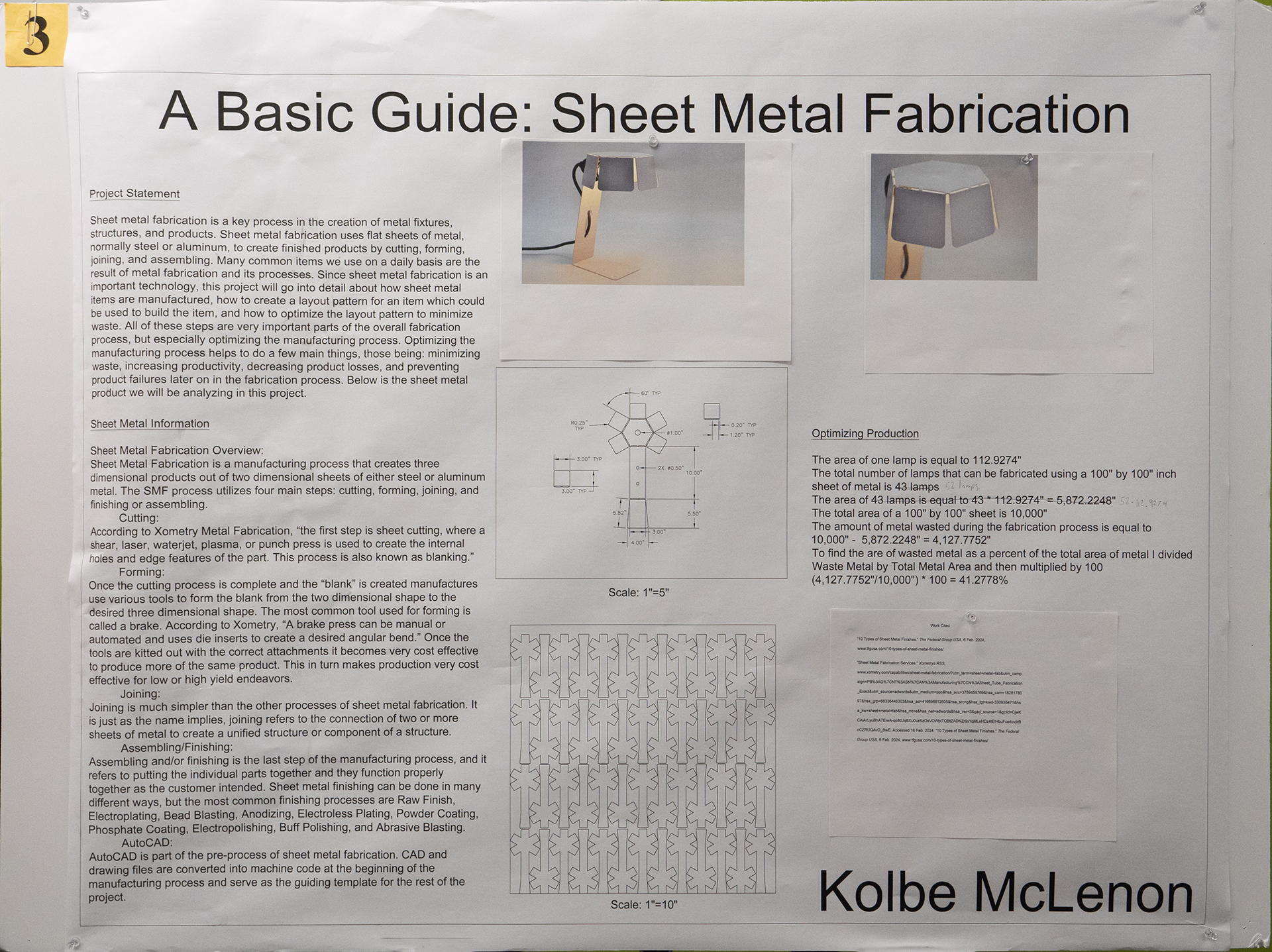
Sheet metal fabrication is a key process in the creation of metal fixtures, structures, and products. Sheet metal fabrication uses flat sheets of metal, normally steel or aluminum, to create finished products by cutting, forming, joining, and assembling. Many common items we use on a daily basis are the result of metal fabrication and its processes. Since sheet metal fabrication is an important technology, this project will go into detail about how sheet metal items are manufactured, how to create a layout pattern for an item which could be used to build the item, and how to optimize the layout pattern to minimize waste. All of these steps are very important parts of the overall fabrication process, but especially optimizing the manufacturing process. Optimizing the manufacturing process helps to do a few main things, those being: minimizing waste, increasing productivity, decreasing product losses, and preventing product failures later on in the fabrication process.
Image
Sheet Metal Lamp Fabrication
CoLab, OCB 100
Sheet metal fabrication is a key process in the creation of metal fixtures, structures, and products. Sheet metal fabrication uses flat sheets of metal, normally steel or aluminum, to create finished products by cutting, forming, joining, and assembling. Many common items we use on a daily basis are the result of metal fabrication and its processes. Since sheet metal fabrication is an important technology, this project will go into detail about how sheet metal items are manufactured, how to create a layout pattern for an item which could be used to build the item, and how to optimize the layout pattern to minimize waste. All of these steps are very important parts of the overall fabrication process, but especially optimizing the manufacturing process. Optimizing the manufacturing process helps to do a few main things, those being: minimizing waste, increasing productivity, decreasing product losses, and preventing product failures later on in the fabrication process.
Comments
The faculty mentor for this project was Susan Johnson, Engineering.