

Utilizing Microbial Diversity for Antibiotic Discovery
Location
CoLab, OCB 100
Start Date
25-4-2024 9:00 AM
Document Type
Poster
Description
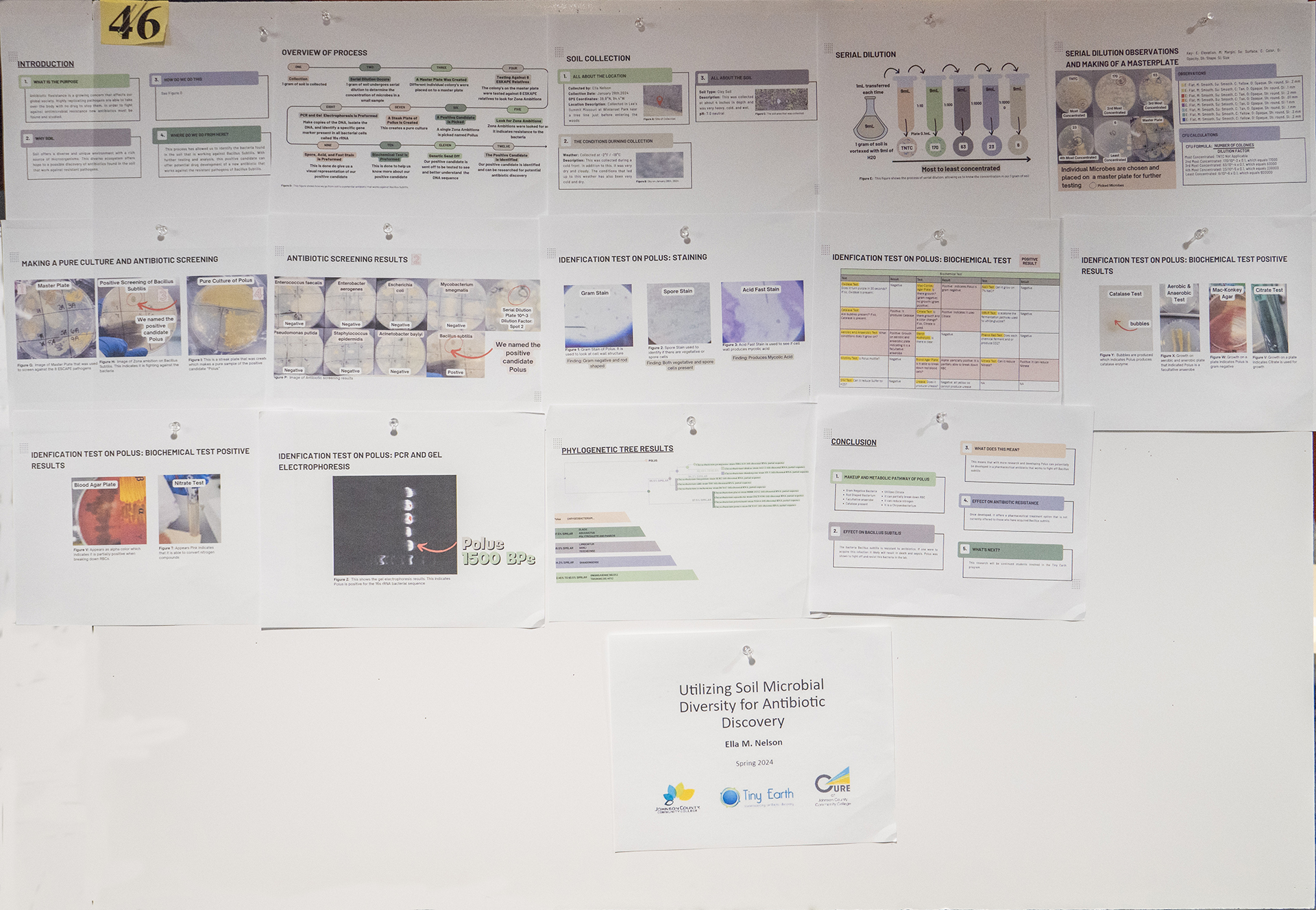
Antibiotic Resistance is a growing concern that affects our global society. In order to fight against antimicrobial resistance new antibiotics must be found and studied. Soil offers a diverse and unique environment with a rich source of microorganisms. This diverse ecosystem offers hope to a possible discovery of antibiotics that work against resistant pathogens. In order to explore this idea, 1 gram of clay soil was collected then serial diluted to determine the concentration of microbes present in the small sample. Individual colonies were then isolated from the serial dilution plate and then tested against multiple different ESKAPE relatives. A positive candidate against Bacillus Subtills was then chosen and a pure sample was created. From here, Polymerase Chain Reaction, gel electrophoresis, and DNA sequencing was performed in order to make copies of the DNA, Isolate the DNA, and identify a specific gene marker present in all bacterial cells called 16s rRNA. With further testing and analysis, this positive candidate can offer potential drug development of a new antibiotic that works against the resistant pathogens of Bacillus Subtills.
Image
Utilizing Microbial Diversity for Antibiotic Discovery
CoLab, OCB 100
Antibiotic Resistance is a growing concern that affects our global society. In order to fight against antimicrobial resistance new antibiotics must be found and studied. Soil offers a diverse and unique environment with a rich source of microorganisms. This diverse ecosystem offers hope to a possible discovery of antibiotics that work against resistant pathogens. In order to explore this idea, 1 gram of clay soil was collected then serial diluted to determine the concentration of microbes present in the small sample. Individual colonies were then isolated from the serial dilution plate and then tested against multiple different ESKAPE relatives. A positive candidate against Bacillus Subtills was then chosen and a pure sample was created. From here, Polymerase Chain Reaction, gel electrophoresis, and DNA sequencing was performed in order to make copies of the DNA, Isolate the DNA, and identify a specific gene marker present in all bacterial cells called 16s rRNA. With further testing and analysis, this positive candidate can offer potential drug development of a new antibiotic that works against the resistant pathogens of Bacillus Subtills.
Comments
The faculty mentor for this project was Beverly Tanui, Biology.