

Location
CoLab, OCB 100
Start Date
25-4-2024 9:00 AM
Document Type
Poster
Description
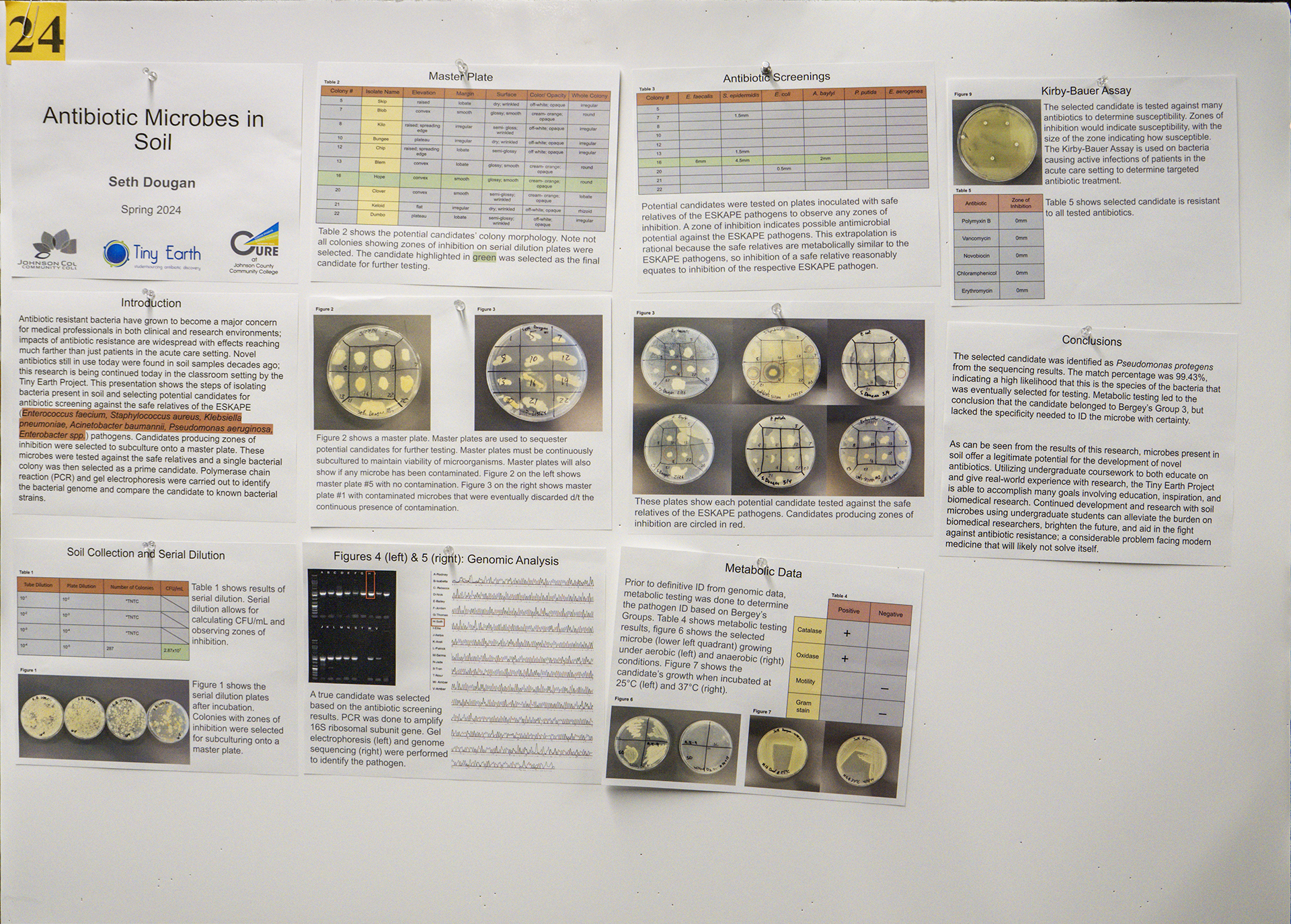
Antibiotic resistant bacteria have grown to become a major concern for medical professionals in both clinical and research environments; impacts of antibiotic resistance are widespread with effects reaching much farther than just patients in the acute care setting. Novel antibiotics still in use today were found in soil samples decades ago; this research is being continued today in the classroom setting by the Tiny Earth Project. This paper presents the steps of isolating bacteria present in soil and selecting potential candidates for antibiotic screening against the safe relatives of the ESKAPE (Enterococcus faecium, Staphylococcus aureus, Klebsiella pneumoniae, Acinetobacter baumannii, Pseudomonas aeruginosa, Enterobacter spp.) pathogens derived from said soil sample. Candidates producing zones of inhibition were selected to subculture onto a master plate. These microbes were tested against the safe relatives and a single bacterial colony was then selected as a prime candidate. Polymerase chain reaction (PCR) and gel electrophoresis were carried out to identify the bacterial genome and compare the candidate to known bacterial strains.
Image
Antimicrobials in Soil
CoLab, OCB 100
Antibiotic resistant bacteria have grown to become a major concern for medical professionals in both clinical and research environments; impacts of antibiotic resistance are widespread with effects reaching much farther than just patients in the acute care setting. Novel antibiotics still in use today were found in soil samples decades ago; this research is being continued today in the classroom setting by the Tiny Earth Project. This paper presents the steps of isolating bacteria present in soil and selecting potential candidates for antibiotic screening against the safe relatives of the ESKAPE (Enterococcus faecium, Staphylococcus aureus, Klebsiella pneumoniae, Acinetobacter baumannii, Pseudomonas aeruginosa, Enterobacter spp.) pathogens derived from said soil sample. Candidates producing zones of inhibition were selected to subculture onto a master plate. These microbes were tested against the safe relatives and a single bacterial colony was then selected as a prime candidate. Polymerase chain reaction (PCR) and gel electrophoresis were carried out to identify the bacterial genome and compare the candidate to known bacterial strains.
Comments
The faculty mentor for this project was Melissa Beaty, Biology.