

Location
CoLab, OCB 100
Start Date
25-4-2024 9:00 AM
Document Type
Poster
Description
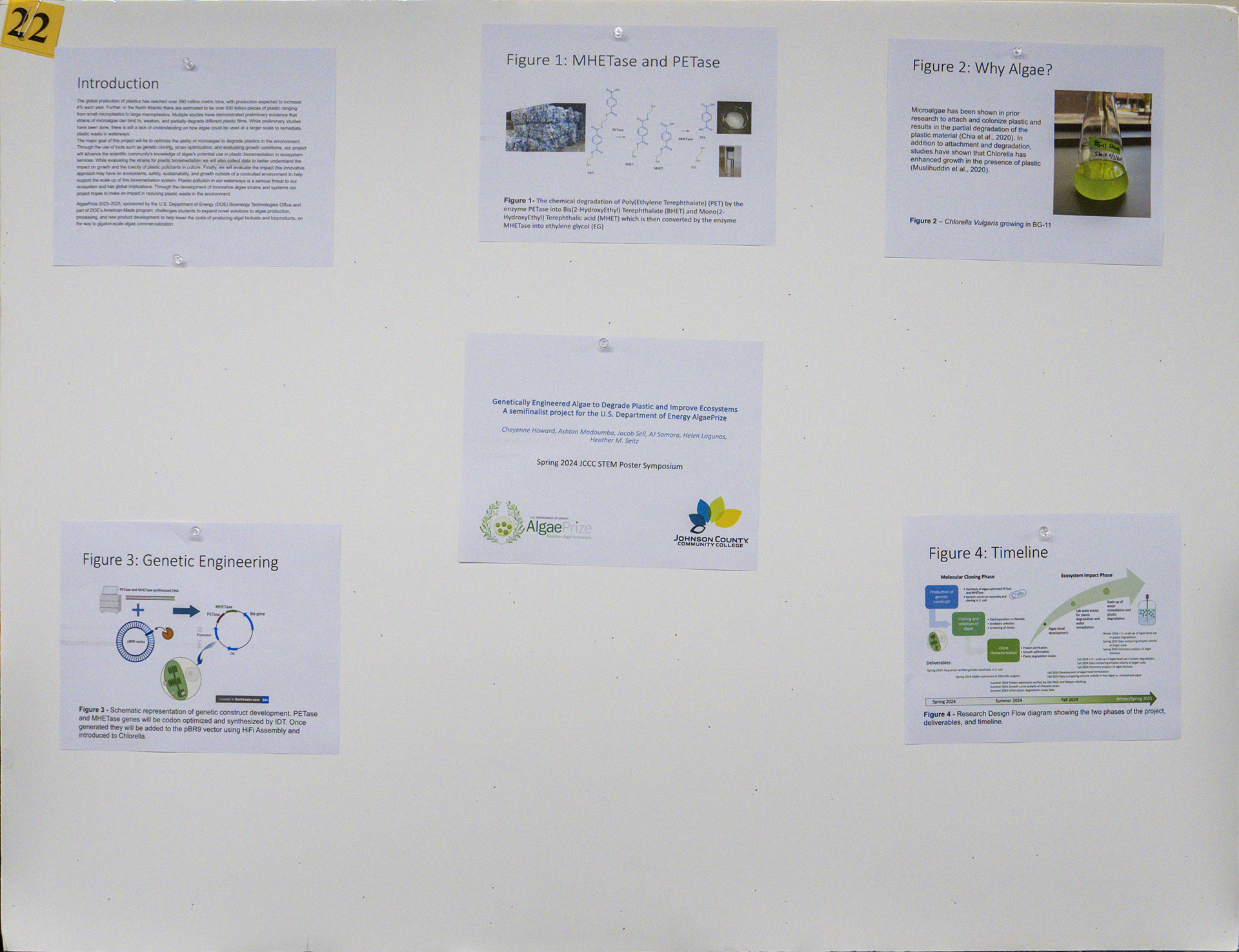
The global production of plastics has reached over 390 million metric tons, with production expected to increase 4% each year. Further, in the North Atlantic there are estimated to be over 930 billion pieces of plastic ranging from small microplastics to large macroplastics. Multiple studies have demonstrated preliminary evidence that strains of microalgae can bind to, weaken, and partially degrade different plastic films. While preliminary studies have been done, there is still a lack of understanding on how algae could be used at a larger scale to remediate plastic waste in waterways. The major goal of this project will be to optimize the ability of microalgae to degrade plastics in the environment. Through the use of tools such as genetic cloning, strain optimization, and evaluating growth conditions, our project will advance the scientific community's knowledge of algae’s potential use in plastic bioremediation in ecosystem services. While evaluating the strains for plastic bioremediation we will also collect data to better understand the impact on growth and the toxicity of plastic pollutants in culture. Finally, we will evaluate the impact this innovative approach may have on ecosystems, safety, sustainability, and growth outside of a controlled environment to help support the scale up of this bioremediation system. Plastic pollution in our waterways is a serious threat to our ecosystem and has global implications. Through the development of innovative algae strains and systems our project hopes to make an impact in reducing plastic waste in the environment.
Image
Genetically Engineered Algae to Degrade Plastic and Improve Ecosystems
CoLab, OCB 100
The global production of plastics has reached over 390 million metric tons, with production expected to increase 4% each year. Further, in the North Atlantic there are estimated to be over 930 billion pieces of plastic ranging from small microplastics to large macroplastics. Multiple studies have demonstrated preliminary evidence that strains of microalgae can bind to, weaken, and partially degrade different plastic films. While preliminary studies have been done, there is still a lack of understanding on how algae could be used at a larger scale to remediate plastic waste in waterways. The major goal of this project will be to optimize the ability of microalgae to degrade plastics in the environment. Through the use of tools such as genetic cloning, strain optimization, and evaluating growth conditions, our project will advance the scientific community's knowledge of algae’s potential use in plastic bioremediation in ecosystem services. While evaluating the strains for plastic bioremediation we will also collect data to better understand the impact on growth and the toxicity of plastic pollutants in culture. Finally, we will evaluate the impact this innovative approach may have on ecosystems, safety, sustainability, and growth outside of a controlled environment to help support the scale up of this bioremediation system. Plastic pollution in our waterways is a serious threat to our ecosystem and has global implications. Through the development of innovative algae strains and systems our project hopes to make an impact in reducing plastic waste in the environment.
Comments
The faculty mentor for this project was Heather Seitz, Biology.