

Location
CoLab, OCB 100
Start Date
25-4-2024 6:00 PM
Document Type
Poster
Description
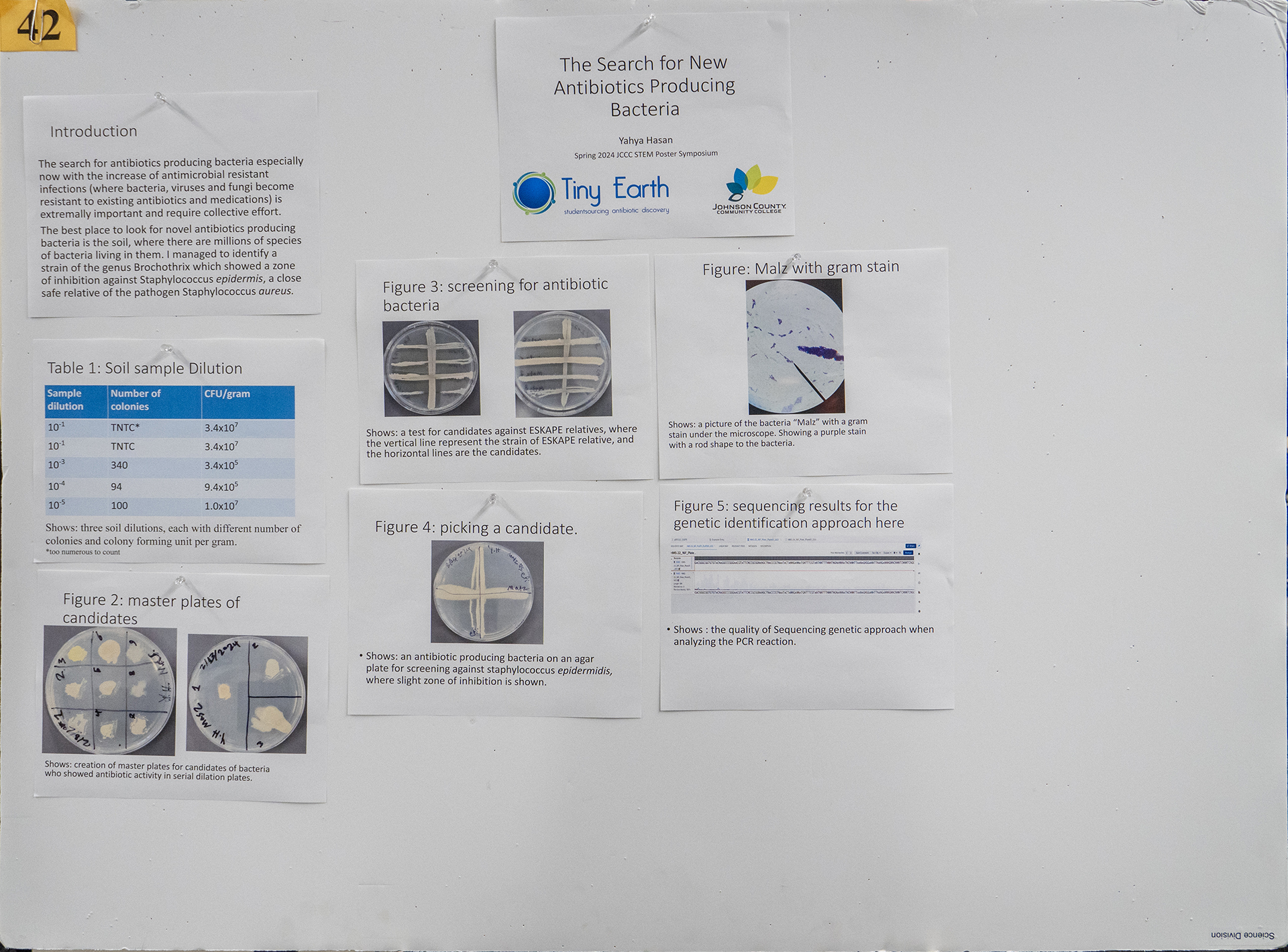
During the recent decade, the number of antimicrobial resistant infections (AMR) has significantly increased and is one of the serious threats that we are currently facing according to the World Health Organization. To combat this issue turning to the soil can be highly promising due to the presence of millions of bacteria, which can produce antibiotics that can be then developed into therapeutic drugs. By testing different strands of soil bacteria against ESKAPE safe relatives, I was able to find a match for a soil bacterium that showed a zone of inhibition against Staphylococcus epidermidis, a close safe relative of the pathogen Staphylococcus aureus. This pathogen lives on the skin and does not cause any harm unless a wound happens, it can infect immunocompromised individuals, especially in hospitals and clinical settings, causing infections and irritations. As it is common in hospitals and treated regularly, some strands of the pathogen develop resistance and the need for new novel antibiotics continues. I searched for this bacteria in a soil sample. I named the new soil bacterium “Malz”, and it was taken from a flower bed outside of a college dorm in Kansas. This place was chosen to see what type of bacteria live near decomposed plants. Malz is an irregular, off-white colored specimen. The DNA was analyzed, and I identified the species using a genetic, staining, and metabolic approach.
Image
The Search for New Antibiotics Producing Bacteria
CoLab, OCB 100
During the recent decade, the number of antimicrobial resistant infections (AMR) has significantly increased and is one of the serious threats that we are currently facing according to the World Health Organization. To combat this issue turning to the soil can be highly promising due to the presence of millions of bacteria, which can produce antibiotics that can be then developed into therapeutic drugs. By testing different strands of soil bacteria against ESKAPE safe relatives, I was able to find a match for a soil bacterium that showed a zone of inhibition against Staphylococcus epidermidis, a close safe relative of the pathogen Staphylococcus aureus. This pathogen lives on the skin and does not cause any harm unless a wound happens, it can infect immunocompromised individuals, especially in hospitals and clinical settings, causing infections and irritations. As it is common in hospitals and treated regularly, some strands of the pathogen develop resistance and the need for new novel antibiotics continues. I searched for this bacteria in a soil sample. I named the new soil bacterium “Malz”, and it was taken from a flower bed outside of a college dorm in Kansas. This place was chosen to see what type of bacteria live near decomposed plants. Malz is an irregular, off-white colored specimen. The DNA was analyzed, and I identified the species using a genetic, staining, and metabolic approach.
Comments
The faculty mentor for this project was Heather Seitz, Biology.