

Location
CoLab, OCB 100
Start Date
25-4-2024 1:30 PM
Document Type
Poster
Description
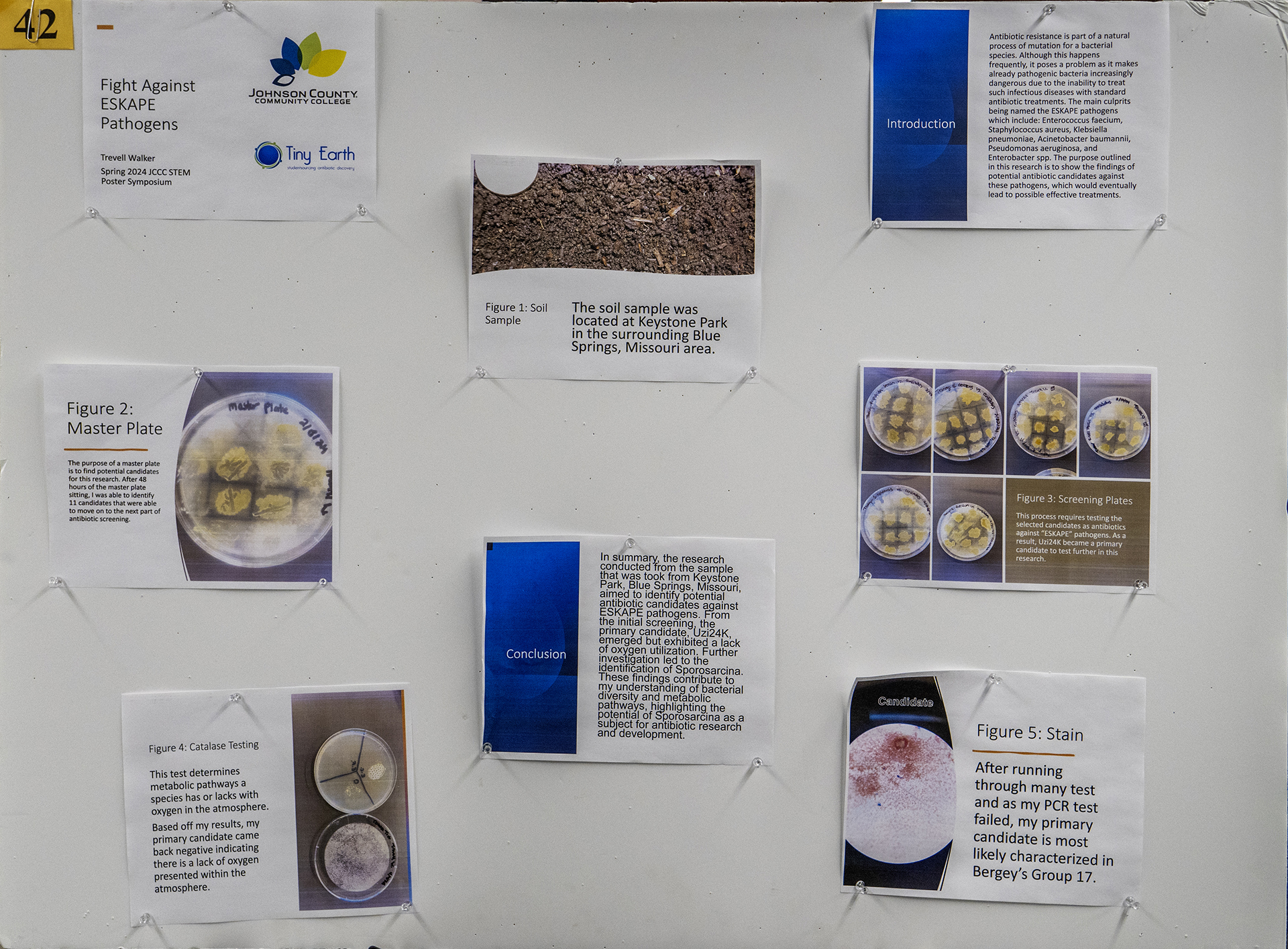
Antibiotic resistance is part of a natural process of mutation for a bacterial species. Although this happens frequently, it poses a problem as it makes already pathogenic bacteria increasingly dangerous due to the inability to treat such infectious diseases with standard antibiotic treatments. The main culprits being named the ESKAPE pathogens which include: Enterococcus faecium, Staphylococcus aureus, Klebsiella pneumoniae, Acinetobacter baumannii, Pseudomonas aeruginosa, and Enterobacter spp. The purpose outlined in this research is to show the findings of potential antibiotic candidates against these pathogens, which would eventually lead to possible effective treatments. This work is highly relevant due to the fact that antibiotics are mainly derived from natural products, meaning physical work needs to be done to scout and isolate these antibiotics containing bacteria. This was done from a soil sample as illustrated in this presentation. The main outcomes from this were 11 total potential candidates, now awaiting further ESKAPE testing, which were all derived from the soil sample located at Keystone Park in the surrounding Blue Springs, Missouri area.
Image
Fight Against ESKAPE Pathogens
CoLab, OCB 100
Antibiotic resistance is part of a natural process of mutation for a bacterial species. Although this happens frequently, it poses a problem as it makes already pathogenic bacteria increasingly dangerous due to the inability to treat such infectious diseases with standard antibiotic treatments. The main culprits being named the ESKAPE pathogens which include: Enterococcus faecium, Staphylococcus aureus, Klebsiella pneumoniae, Acinetobacter baumannii, Pseudomonas aeruginosa, and Enterobacter spp. The purpose outlined in this research is to show the findings of potential antibiotic candidates against these pathogens, which would eventually lead to possible effective treatments. This work is highly relevant due to the fact that antibiotics are mainly derived from natural products, meaning physical work needs to be done to scout and isolate these antibiotics containing bacteria. This was done from a soil sample as illustrated in this presentation. The main outcomes from this were 11 total potential candidates, now awaiting further ESKAPE testing, which were all derived from the soil sample located at Keystone Park in the surrounding Blue Springs, Missouri area.
Comments
The faculty mentor for this project was Heather Seitz, Biology.