

Location
CoLab, OCB 100
Start Date
25-4-2024 1:30 PM
Document Type
Poster
Description
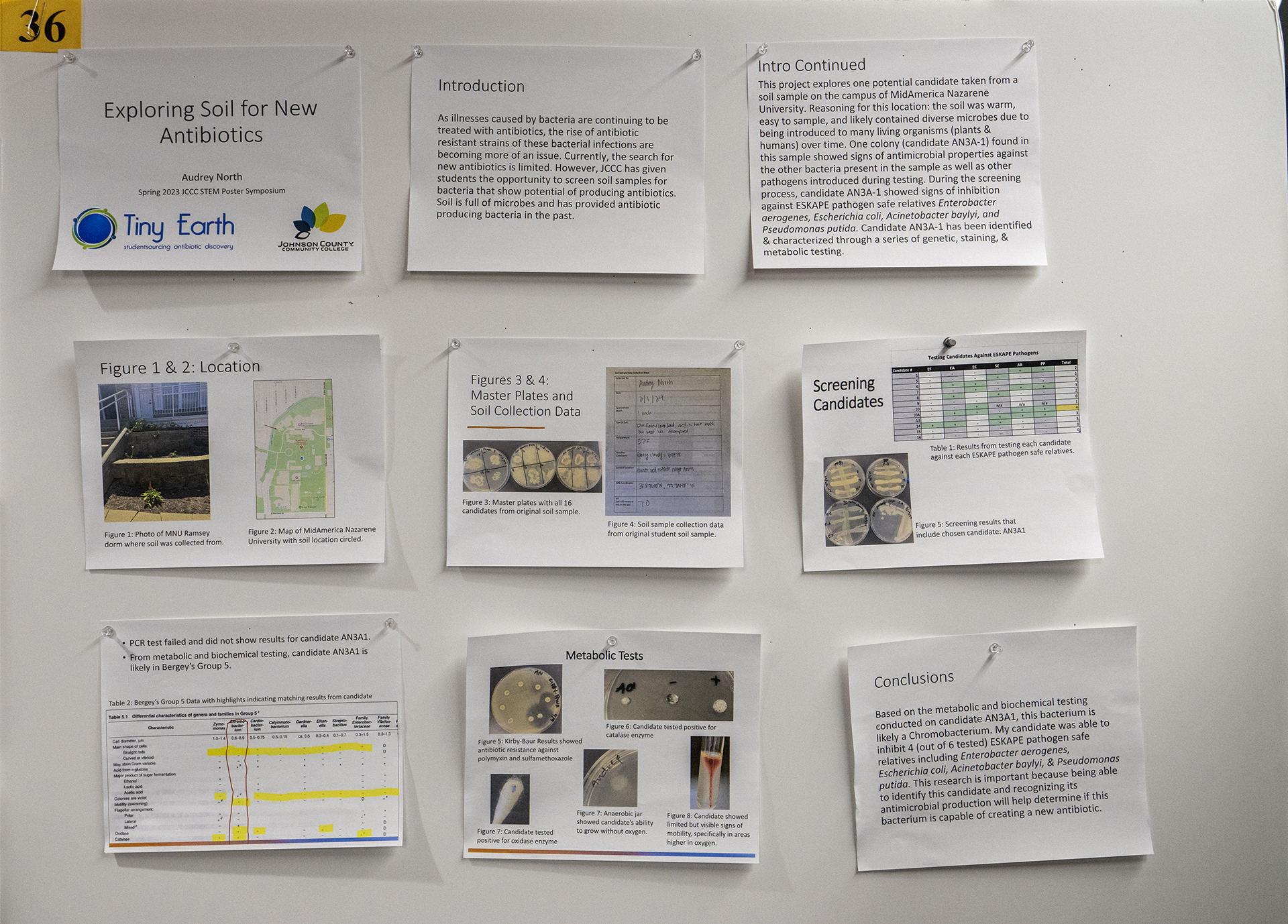
As illnesses caused by bacteria are continuing to be treated with antibiotics, the rise of antibiotic resistant strains of these bacterial infections are becoming more and more of an issue. Currently, the search for new antibiotics is limited. However, JCCC has given students the opportunity to screen soil samples for bacteria that show potential of producing antibiotics. Soil is full of living organisms and has provided antibiotic producing bacteria in the past. This paper will discuss one potential candidate taken from a soil sample on the campus of MidAmerica Nazarene University. This sample was extracted from an old flower bed outside of a dorm. The reason for choosing this location is because the soil was warm, easy to sample, and likely contained diverse microbes due to being introduced to many living organisms (plants and humans) over time. One colony found in this sample showed signs of antimicrobial properties against the other bacteria present in the sample as well as other pathogens introduced during testing. This candidate will be called AN3A-1. During the screening process, candidate AN3A-1 showed signs of inhibition against ESKAPE pathogen safe relatives Enterobacter aerogenes, Escherichia coli, Acinetobacter baylyi, and Pseudomonas putida. Throughout this paper, candidate AN3A-1 will be identified and characterized through a series of genetic, staining, and metabolic testing.
Image
Exploring Soil for New Antibiotics
CoLab, OCB 100
As illnesses caused by bacteria are continuing to be treated with antibiotics, the rise of antibiotic resistant strains of these bacterial infections are becoming more and more of an issue. Currently, the search for new antibiotics is limited. However, JCCC has given students the opportunity to screen soil samples for bacteria that show potential of producing antibiotics. Soil is full of living organisms and has provided antibiotic producing bacteria in the past. This paper will discuss one potential candidate taken from a soil sample on the campus of MidAmerica Nazarene University. This sample was extracted from an old flower bed outside of a dorm. The reason for choosing this location is because the soil was warm, easy to sample, and likely contained diverse microbes due to being introduced to many living organisms (plants and humans) over time. One colony found in this sample showed signs of antimicrobial properties against the other bacteria present in the sample as well as other pathogens introduced during testing. This candidate will be called AN3A-1. During the screening process, candidate AN3A-1 showed signs of inhibition against ESKAPE pathogen safe relatives Enterobacter aerogenes, Escherichia coli, Acinetobacter baylyi, and Pseudomonas putida. Throughout this paper, candidate AN3A-1 will be identified and characterized through a series of genetic, staining, and metabolic testing.
Comments
The faculty mentor for this project was Heather Seitz, Biology.