

Location
CoLab, OCB 100
Start Date
25-4-2024 1:30 PM
Document Type
Poster
Description
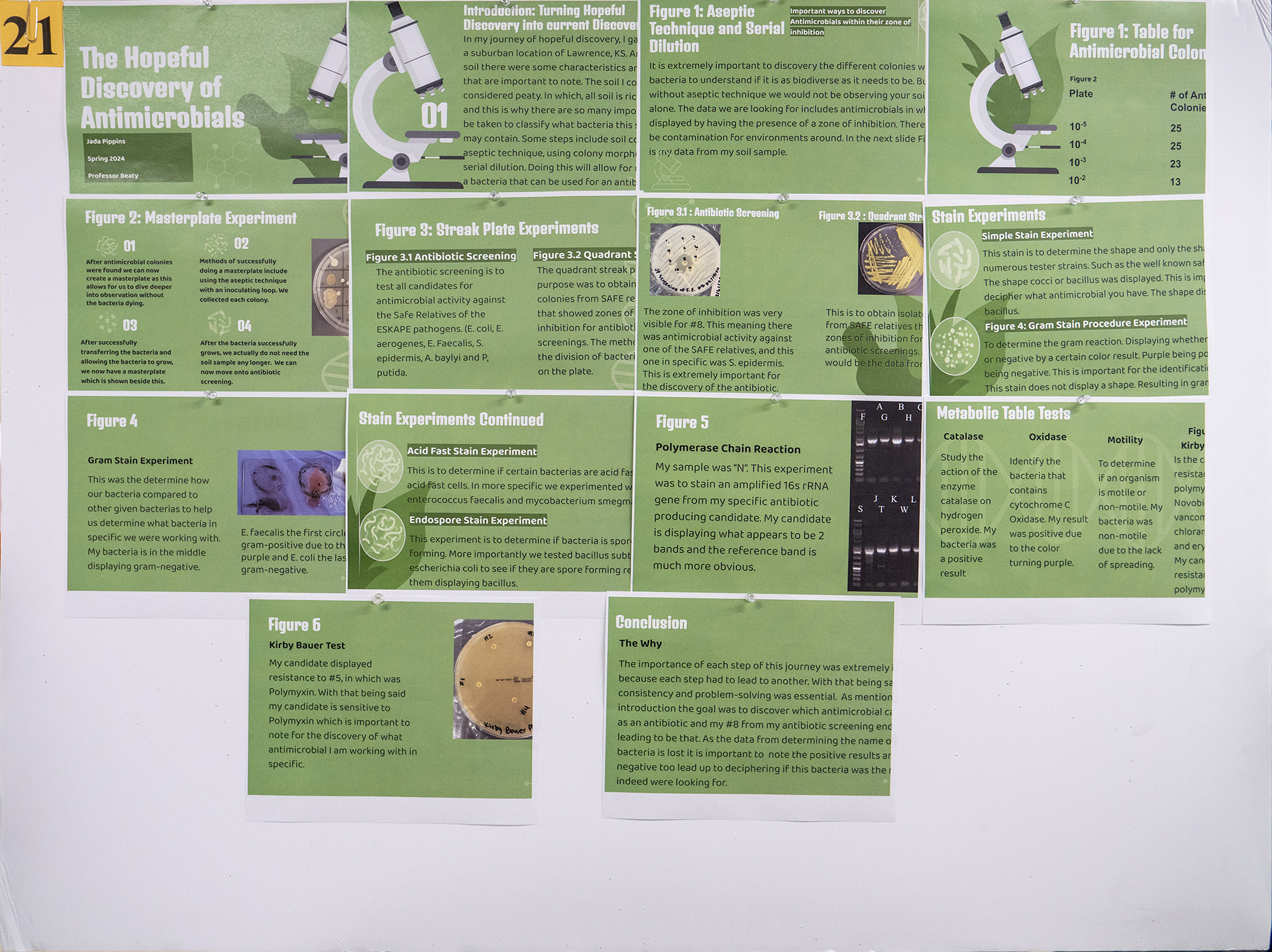
When it comes to soil, it is a remarkably rich and diverse ecosystem, hosting a variety of microorganisms, including bacteria, fungi, actinomycetes, and more. These microorganisms have evolved in complex relationships within the soil environment, leading to the production of a variety of compounds, many of which possess antimicrobial properties. The objective of my research was to isolate bacteria obtained from soil samples with the goal of investigating their potential to produce antibiotics and potentially uncover antimicrobial agents. Given the growing concern over antimicrobial resistance and its impact on public health, particularly with certain pathogenic bacteria developing resistance to conventional antibiotics, this research focused on exploring the antibiotic-producing capabilities of soil-dwelling bacteria. Various procedures were employed to identify bacteria within the soil samples and assess their ability to synthesize antibiotics. These procedures included inoculating bacterial isolates onto agar plates, conducting successive dilutions of the original soil sample, and subjecting the isolates to an antibiotic production against a panel of bacteria including “Staphylococcus aureus, Enterobacter aerogenes, Acinetobacter Baylyi, Escherichia coli, Staphylococcus epidermidis, Pseudomonas putida, and Enterococcus faecalis”. The ultimate goal was to determine whether the soil harbored bacteria is capable of producing antibiotics, therefore contributing to the ongoing search for new antimicrobial agents.
Image
The Hopeful Discovery of Antimicrobials
CoLab, OCB 100
When it comes to soil, it is a remarkably rich and diverse ecosystem, hosting a variety of microorganisms, including bacteria, fungi, actinomycetes, and more. These microorganisms have evolved in complex relationships within the soil environment, leading to the production of a variety of compounds, many of which possess antimicrobial properties. The objective of my research was to isolate bacteria obtained from soil samples with the goal of investigating their potential to produce antibiotics and potentially uncover antimicrobial agents. Given the growing concern over antimicrobial resistance and its impact on public health, particularly with certain pathogenic bacteria developing resistance to conventional antibiotics, this research focused on exploring the antibiotic-producing capabilities of soil-dwelling bacteria. Various procedures were employed to identify bacteria within the soil samples and assess their ability to synthesize antibiotics. These procedures included inoculating bacterial isolates onto agar plates, conducting successive dilutions of the original soil sample, and subjecting the isolates to an antibiotic production against a panel of bacteria including “Staphylococcus aureus, Enterobacter aerogenes, Acinetobacter Baylyi, Escherichia coli, Staphylococcus epidermidis, Pseudomonas putida, and Enterococcus faecalis”. The ultimate goal was to determine whether the soil harbored bacteria is capable of producing antibiotics, therefore contributing to the ongoing search for new antimicrobial agents.
Comments
The faculty mentor for this project was Melissa Beaty, Biology.