

Location
CoLab, OCB 100
Start Date
25-4-2024 12:00 PM
Document Type
Poster
Description
Even though soil was a previously abundant and consistent reservoir of antibiotic research, in the past few decades new antibiotics have yet to be discovered from soil. In an attempt to uncover an inhibitory candidate of my own, I collected data and performed a series of tests on a soil sample I gathered from a front yard in suburban Shawnee, Kansas, but no intriguing results came to fruition. However, from a pond soil sample collected at Flat Rock Creek Park, I have found a bacteria species that has the potential to inhibit Pseudomonas putida and Staphylococcus epidermidis, safe relatives of ESKAPE pathogens. ESKAPE pathogens are the primary culprit of hospital-acquired infections worldwide; they are resistant to known antibiotics, and it is hard for medical professionals to fight with medicines available today. I found this bacterium via serial dilution, antibiotic screening, PCR amplification and sequencing of the 16srRNA gene, and metabolic testing. Antibiotic resistance is an already looming issue in medicine and the world as a whole; as a result, finding new inhibitory bacteria to combat them is more important than ever.
Image
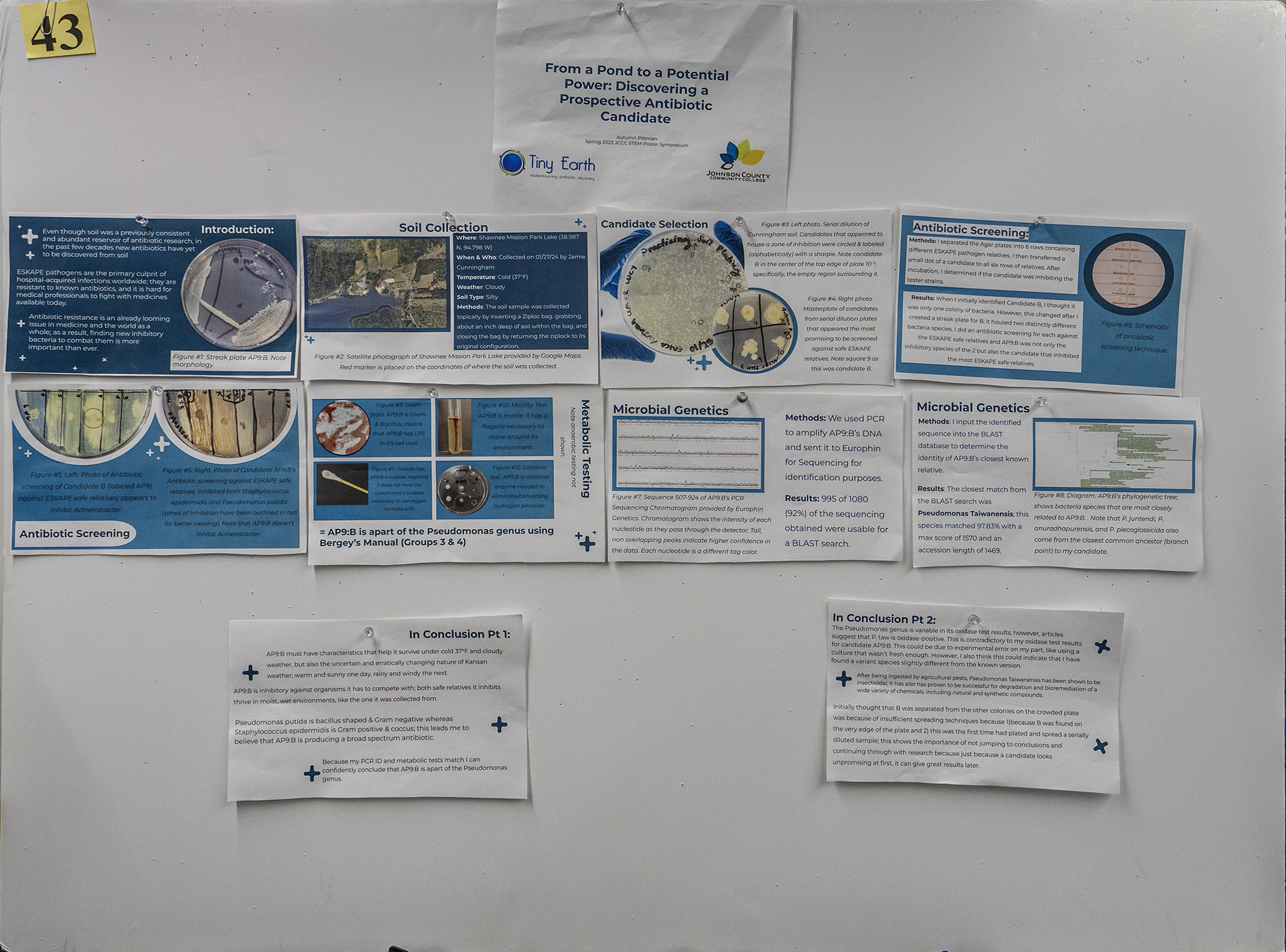
From Pond to Potential Power: Discovering a Prospective Antibiotic Candidate
CoLab, OCB 100
Even though soil was a previously abundant and consistent reservoir of antibiotic research, in the past few decades new antibiotics have yet to be discovered from soil. In an attempt to uncover an inhibitory candidate of my own, I collected data and performed a series of tests on a soil sample I gathered from a front yard in suburban Shawnee, Kansas, but no intriguing results came to fruition. However, from a pond soil sample collected at Flat Rock Creek Park, I have found a bacteria species that has the potential to inhibit Pseudomonas putida and Staphylococcus epidermidis, safe relatives of ESKAPE pathogens. ESKAPE pathogens are the primary culprit of hospital-acquired infections worldwide; they are resistant to known antibiotics, and it is hard for medical professionals to fight with medicines available today. I found this bacterium via serial dilution, antibiotic screening, PCR amplification and sequencing of the 16srRNA gene, and metabolic testing. Antibiotic resistance is an already looming issue in medicine and the world as a whole; as a result, finding new inhibitory bacteria to combat them is more important than ever.
Comments
The faculty mentor for this project was Heather Seitz, Biology.